1936 – 1942 URBINO
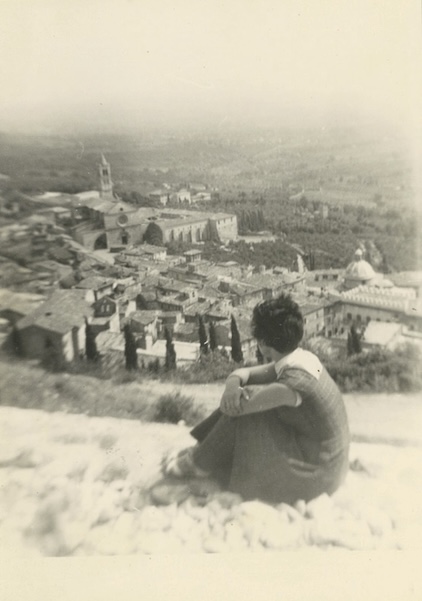
Memè grew up and studied within the walls of the Ducal Palace in Urbino, passing by the masterpieces of Raphael, Piero della Francesca and Paolo Uccello every day. Art became a wonderful part of her daily life, as her eldest daughter Annamaria Olivi recalls: “Mum always spoke to us about art as a familiar, intimate and affectionate experience”. Those years left an indelible mark on the young artist’s style, her highly expressive brushwork, and her poetic and formal exploration, which drew inspiration from the gentle landscapes of the Marche region.
In Urbino, the teaching of professors with a contemporary style, such as Luigi Bartolini, Leonardo Castellani and Arnoldo Ciarrocchi, shaped the beginnings of Memè’s artistic exploration. The painting and engraving classes followed the styles and aesthetic trends of the 1930s, without limiting themselves to the reproduction of the past. At the time, after the first three years at the Institute of Fine Arts for Book Illustration and Decoration, students were awarded the diploma of Book Craftsman, whilst at the end of the second three-year period – equivalent to a modern-day degree – they were awarded the title of Master of Art in the Book Decoration section. Memè obtained this title on 12 June 1942, with the presentation of a series of illustrations inspired by a work by the poet Metastasio, “L’isola disabitata”. She and her partner Vanda Radi were the only women on the course.
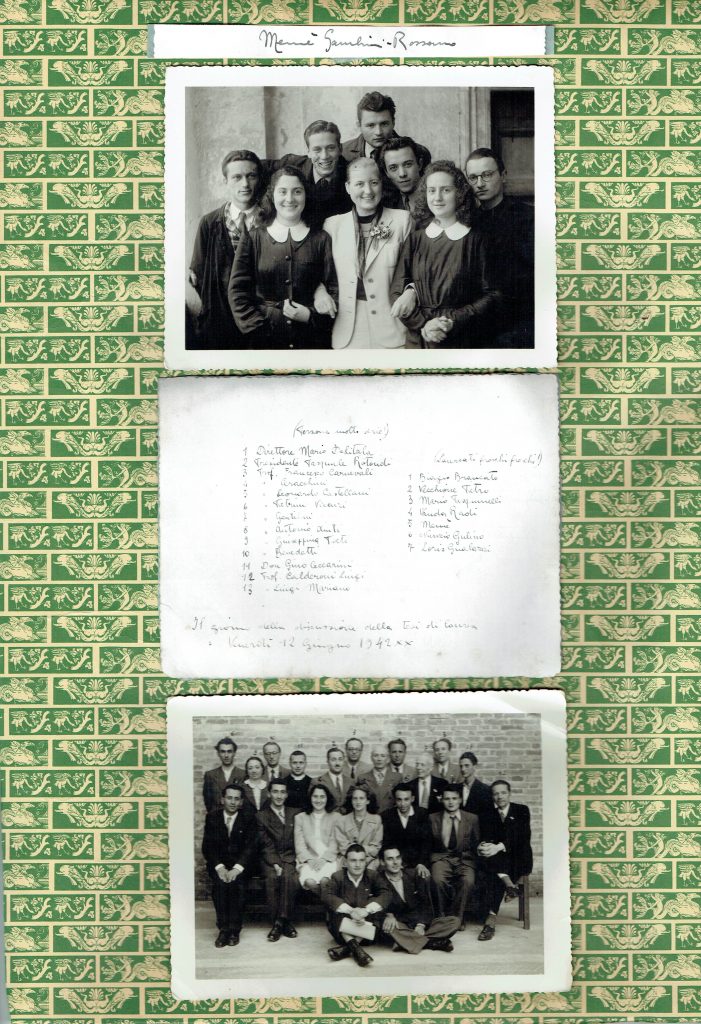
Also in 1942, Memè Olivi obtained the title of Professor of Lithography, thus beginning her career as a teacher of art history and drawing in secondary schools. This experience had a profound impact on her, as did the many friendships she cultivated in Urbino, including a particularly enduring one with the engraver Nunzio Gulino.
1942 – 1947 SENIGALLIA – ROME – FLORENCE
Ambition and curiosity drove Memè Olivi to further her studies and enrol at the Academy of Fine Arts in Rome. In the capital, she began living with her mother’s elder sister, Maria Vignoli-Manfrini, a pharmacist, a cultured woman with a strong character, with whom Memè was constantly at odds. The difficulties with her aunt, combined with those encountered at the Academy, where the young artist failed to find a like-minded environment, led Memè to abandon her studies. From her time in Rome, however, she retained the pleasant memory of her friendship with Renzo Vespignani. After a brief return to the Marche region to one of the farmhouses where her family had been evacuated, Memè Olivi, an enterprising young woman accustomed to the culturally stimulating life of the Urbino Academy, decided to move to Florence and enrol once again at the Academy of Fine Arts. This path, too, was brutally cut short, this time by the war and increasing restrictions.
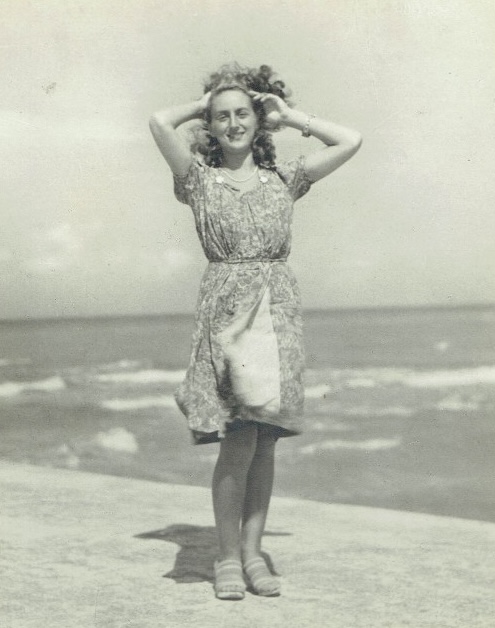
Even when she returned to stay with her family, Memè did not have the tools necessary to continue engraving, but she continued to develop her artistic practice through drawing. In 1942, to escape the harsh pressures imposed by the war, the family moved to a country house outside Senigallia, Villa Amelia. This place would become particularly dear to Memè, inextricably linking her artistic output to the hilly landscapes of the Marche.
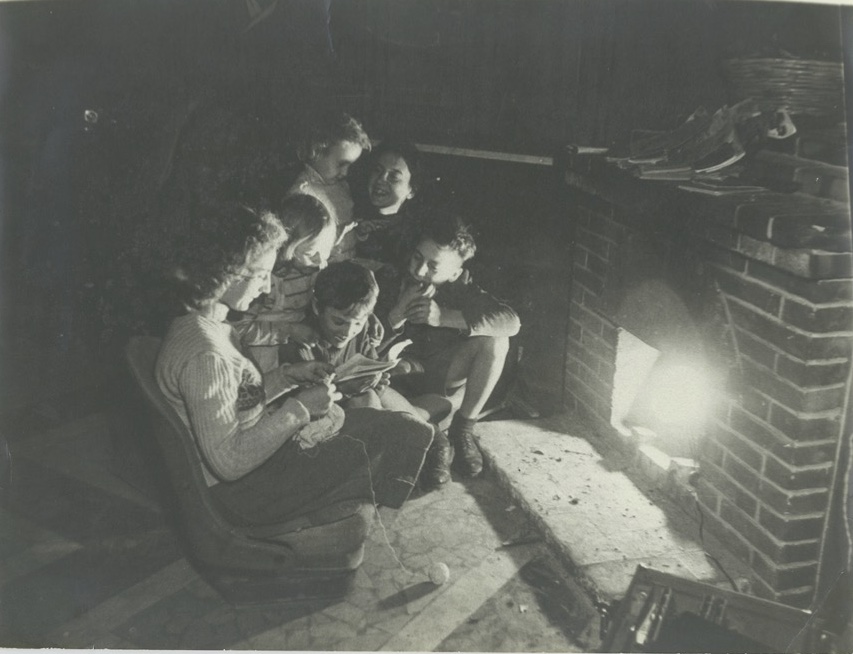
In 1944, the region was liberated and the Gambini Rossano family returned to Senigallia, only to find their large house occupied by the Anglo-American command. Although they were forced to live in a ground-floor flat in the villa, Memè remembers that period as one of the happiest of her youth.
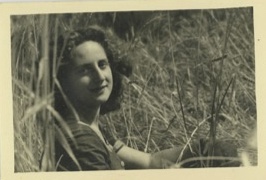
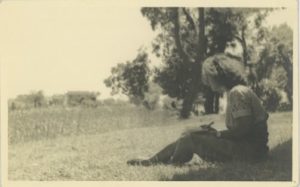
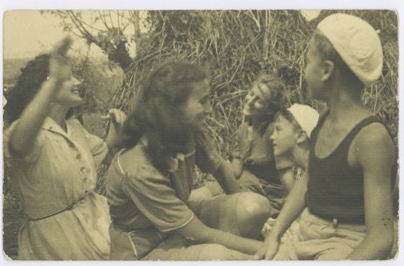
1946 – 1959 MILAN
In 1946, the young artist enrolled at the Brera Academy in Milan to continue her studies. She immersed herself in Brera’s bohemian scene amidst the effervescent atmosphere of the post-war period, forging lasting relationships and working tirelessly. At the Jamaica bar, she met her future husband, Beniamino (Bino) Olivi, a young man from Treviso who was working at the time as an assistant lecturer in international law at the University of Pavia. And it was in this very Milan that Memè began to make her way in the professional world. She did not complete her studies at the Brera Academy, but began working in the fields of illustration and publishing. She created covers for Rizzoli and Mondadori, and collaborated with ‘Vogue Italia’ and other magazines. For Galtrucco, a prestigious Milanese fashion house, she designed fabrics and created sophisticated mannequins for the shop windows of the Piazza Duomo store.
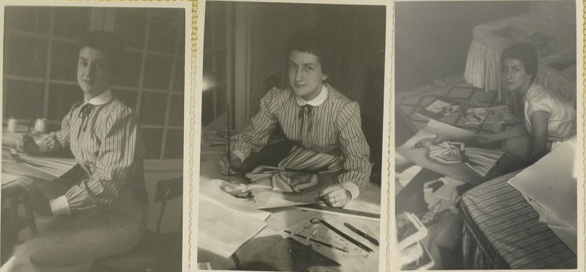
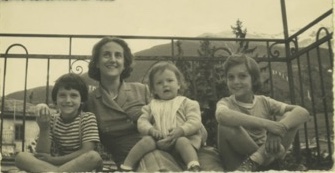
In 1954, at just thirty-two years of age, Memè opened a graphic design studio together with two other women. There, a free and creative atmosphere flourished, fostered by the gathering of numerous artists and intellectuals who were part of her circle of friends. Among them was the designer Enzo Mari. During those years, she also worked in Paris as a press correspondent for the publishers with whom she collaborated. Among her most important works are the illustrations for Dr Spock’s book, “The Common Book of Baby and Child Care”, in the 1958 edition, and for the books “J’attends un enfant” and “J’élève mon enfant” by Laurence Pernoud. These guides for new mothers would go on to become classics in the field of childcare and enjoy enormous success throughout Europe. Despite her heavy workload across various fields, Memè would go on to become the mother of three daughters – Anna Maria, Elisabetta and Olivia – whom she would raise with deep affection.
1959 – 2018 BRUSSELS
In 1958, Bino Olivi won a competition as part of an EU project aimed at harmonising European legal systems. This success led him to move to Brussels where, less than a year later, he became Director of the Directorate-General for Competition at the European Economic Committee. Initially, Memè did not follow her husband, but the following year she left her studio in Milan and settled in Belgium with her daughters.
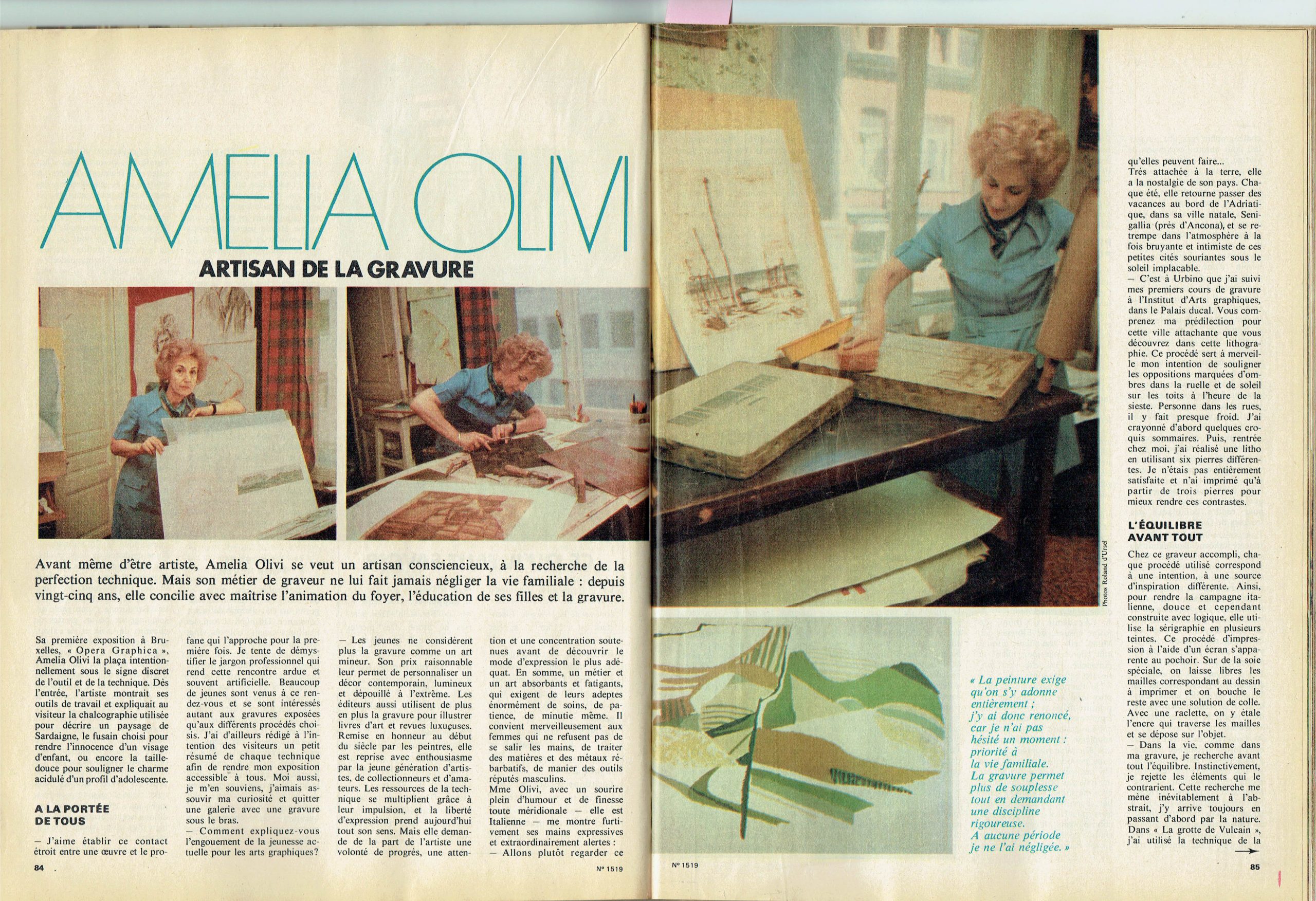
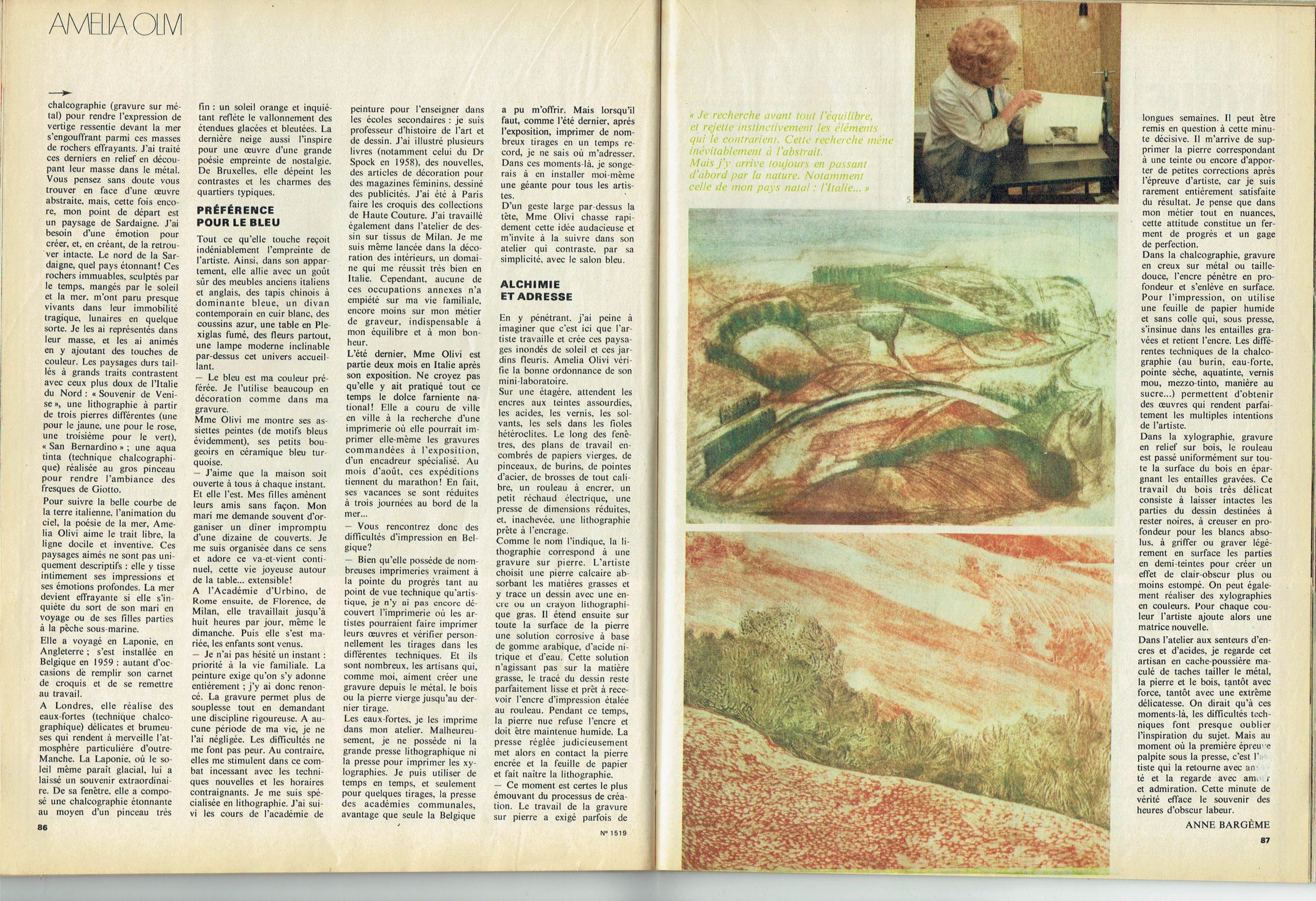
In Brussels, Memè continued her work as an illustrator, thanks in part to the excellent references she had received from the companies she had worked for in Milan. She collaborated in particular with the highly successful magazine “Femmes d’aujourd’hui”. However, as time went on, she decided to give up this profession, which had enabled her to support herself financially, in order to devote herself entirely to her family and her true passion: engraving. After all, as she would say in an interview published in the very same magazine “Femmes d’aujourd’hui”, “I never hesitated for a moment: my family comes first. Painting demands that one devotes oneself entirely to it, and so I gave it up. Engraving allows for more flexibility, albeit requiring a certain rigour.1”
In keeping with her words, Memè picked up her tools again and began attending the Boitsfort Academy. Boitsfort offered an environment free from academic stylistic conventions, which encouraged interaction between professionals and amateurs.
Memè was clearly a cut above everyone else, yet the Academy nevertheless became a fertile ground for her to exchange ideas and knowledge. There, she also formed a strong bond with the director, Kikie Crêvecoeur, a renowned engraver on the Belgian art scene. During this period, Memè devoted herself particularly to classical engraving, a discipline she had always cultivated and in which she was a master. Memè Olivi became a multifaceted artist, capable of pursuing various professions and taking joy in each of them: “I think it’s wonderful to have different activities. I like learning things I find interesting, and then passing on that knowledge to others”.2.
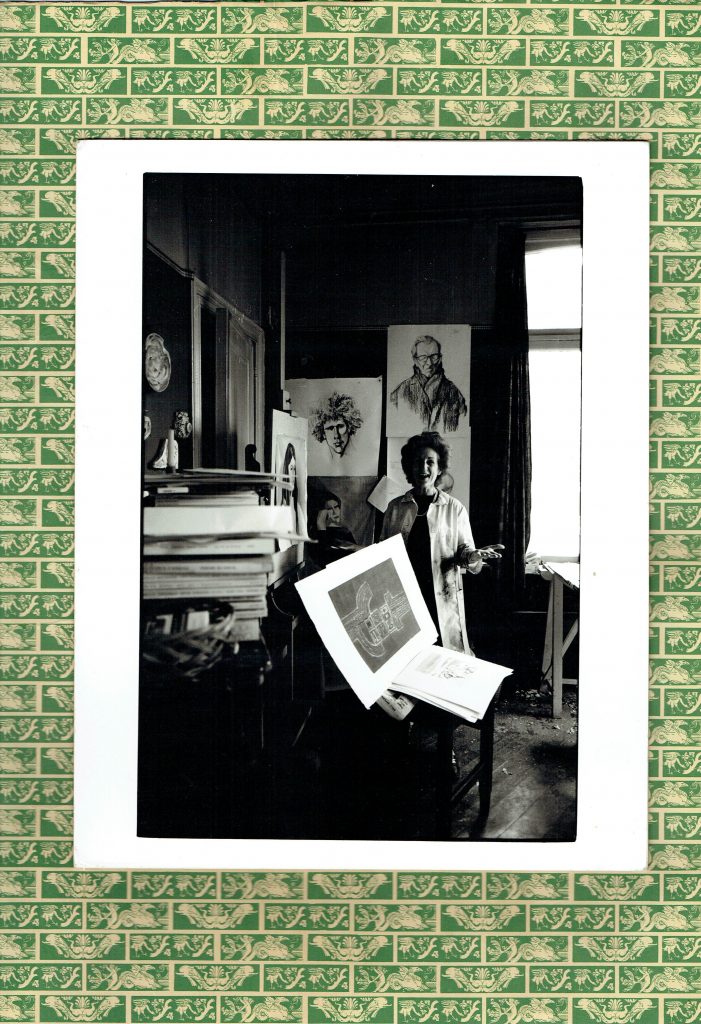
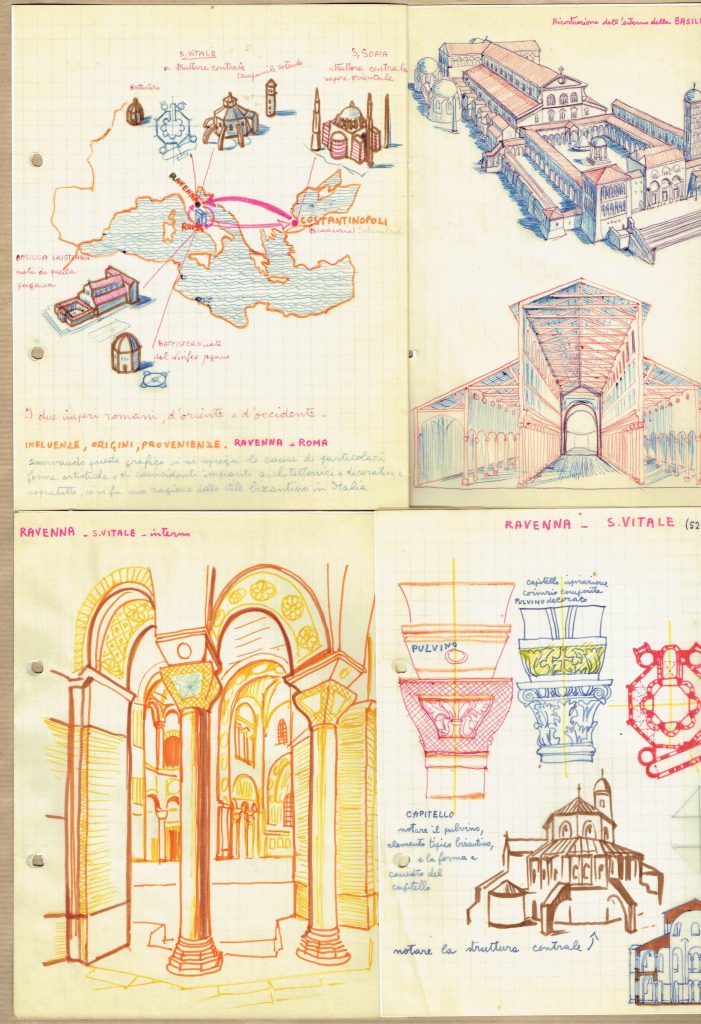
During the same period (from 1962 to 1969), Memè taught art and art history in the Italian section of the European School in Brussels. A meticulous teacher who was keen to nurture the artistic talents of her pupils, she inspired the artistic career of the future painter Marco del Re, who would remember her with great affection.
Meanwhile, in 1961, Bino Olivi took on a position of great importance, becoming Spokesperson for the European Economic Commission and Director-General of Information. Just a few years later, one of her daughters, Anna Maria, enrolled at Ca’ Foscari University: for Memè, this was an opportunity to spend more time in Venice and attend the engraving workshop at the Academy of Fine Arts, where she met the engraver and mosaicist Riccardo Licata. Although the hills of the Marche region remained her main source of inspiration, Memè was captivated by the beauty of Venice and dedicated many engravings to views of the lagoon city.
During those years, Memè’s professional life was disrupted by personal events that led her through a period of great physical and psychological difficulty. It was thanks to the power that art exerted over her that Memè managed to find new life. She resumed engraving, continued her artistic exploration and found a new strength that drove her to travel and exhibit her works in many parts of the world, from Argentina to the United States, from Japan to Australia
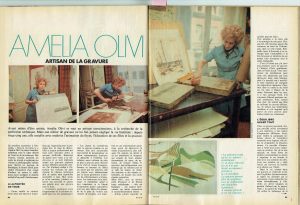
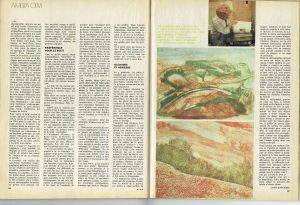
In 1973, Memè’s extensive artistic output led to her first solo exhibition. The exhibition, entitled “Memè Olivi. Opera Grafica”, took place in Brussels at the Gallerie Angle Aigu. On this occasion, Memè did not merely exhibit her works, but also undertook to demonstrate the processes and tools used to create them. To capture the public’s attention, she devoted herself to illustrating the techniques and materials typical of engraving, transporting visitors to the heart of her artistic journey. As she herself stated, again in the lengthy interview published in 1974 in “Femmes d’Aujourd’hui”: “I love establishing this connection between a work and a layperson approaching it for the first time. I try to demystify the professional jargon that makes this encounter difficult and often artificial”3. Memè has an extremely extroverted personality; she loves talking to people to understand their state of mind, what they feel and what they are experiencing.
“I need to feel poetry within me, and I find it only through constant contact with people”4.
1974 – 2019 BRUSSELS – PARIS – ROME – SENIGALLIA – TRAVELS AROUND THE WORLD
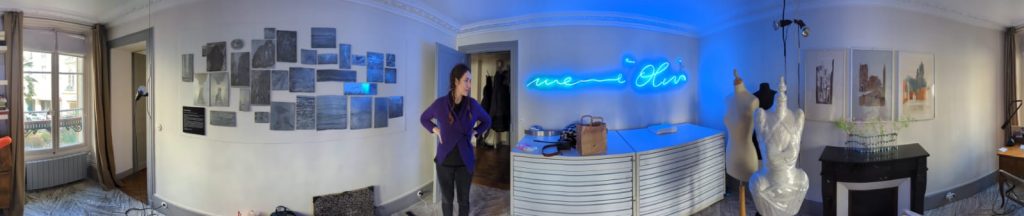
In 1974, Memè and Bino bought a flat in Paris, on Rue Jacob, in the elegant Saint-Germain-des-Prés district. Memè used it as a studio and base from which to explore the city, but did not make it his permanent home. From that moment on, he devoted himself to his artistic experimentation, moving between Brussels, Rome, Paris and Senigallia.

Despite his constant travelling, Memè cherished the memory of his homeland with deep nostalgia. Every summer she returns to the Adriatic coast, to Senigallia, savouring that bucolic and intimate atmosphere which her works convey so effectively. Yet her art is capable of going beyond mere representation, capturing the poetic essence of reality in all its splendour. As the writer Franco Foschi states in the catalogue of Memè Olivi’s engraving exhibition in Recanati, “Those born in the Marche carry within them the image of a gentle landscape that opens out towards undefined spaces, but only a true artist, who understands the patience of ancient techniques, can express in a style that speaks even to those unfamiliar with the language of art, what can only be seen with the eyes of the soul”5.
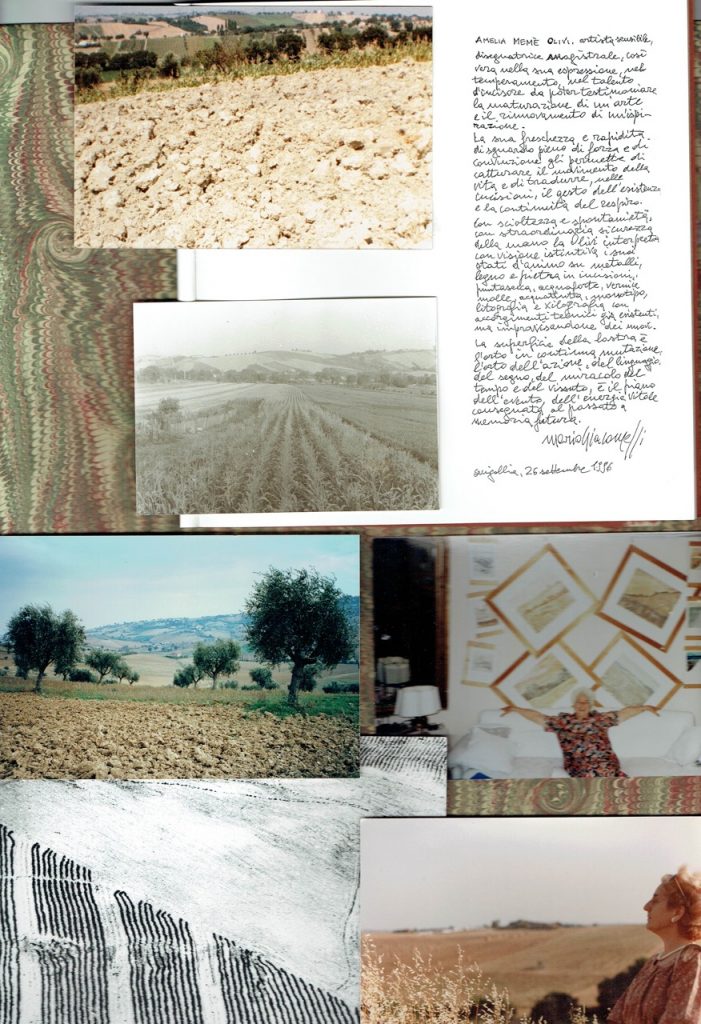
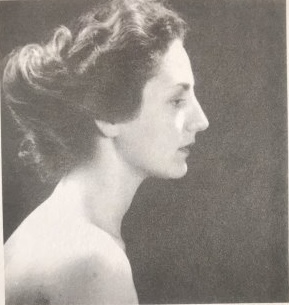
Memè’s connection to her native region goes beyond a mere admiration for the landscapes. Although she never returned to live in Senigallia, she remained in contact with numerous artists from the Marche region, including the photographer Mario Giacomelli. In a letter dedicated to her, dated 1996, Giacomelli describes her as “a sensitive artist, a masterful draughtswoman, so true in her expression, temperament and talent as an engraver that she bears witness to the maturation of an art form and the renewal of inspiration”. Mario Giacomelli was part of a group of photographers from the Marche region, the Associazione Fotografica Misa, named after the River Misa which flows through Senigallia. The Association was founded by Giuseppe Cavalli, the art critic, intellectual and photographer who also established the La Bussola group in Milan and who immortalised the young Memè in a splendid photographic portrait in profile. Many of the Association’s photographers, such as the lawyer Ferruccio Ferroni—also from Senigallia and a close friend of Memè’s—actually had other professions. Giacomelli, a poet and painter, recognised worldwide as one of the greatest masters of photography and the creator of marvellous landscapes of the Marche region, ran his small printing shop in the centre of Senigallia for years. Among other things, he printed a series of original postcards for Memè, featuring ten views of the city of Senigallia. The Scuola del Libro in Urbino also remains an important point of reference for Memè, a familiar place to return to every summer. Although she owns two presses at his home in Brussels, the artist makes full use of the lithographic presses at the school, where she also produces numerous screen prints.
For Memè Olivi, the 1970s were a period of prolific artistic output, accompanied by numerous trips and exhibitions in various parts of the world. Between 1974 and 1977 she exhibited in New York and Washington DC, in 1979 in Paris, and in 1982 in Melbourne, Australia. In 1987 another significant event took place in the artist’s life: the purchase of a house in Brussels, which she herself transformed into a proper studio. A few years later, at the invitation of the Italian Ministry of Foreign Affairs, she set off on a long journey to Latin America, where she exhibited in numerous shows in Uruguay, Paraguay, Chile and Argentina. In 1994, the Museo Nacional del Grabado in Buenos Aires invited her to give a series of lectures and practical engraving classes. Memè accepted without hesitation, extending her stay in South America. On the other hand, her vocation for teaching remained constant throughout her life: “My experience tells me that it is not a matter of teaching through many books, overwhelming the students. They need to look, to see what I am explaining”6. She did not regard teaching as a secondary activity, but as complementary to that of engraving.
In 1998, in Recanati, in the Marche region, a major exhibition of her engravings inspired by the literary works of Giacomo Leopardi was organised to mark the bicentenary of the poet’s birth. To find inspiration, Memè spent three months in Recanati, staying at Casa Leopardi, and succeeded in capturing the beauty of those landscapes created by the endless succession of hills. The shades he uses are those of the earth, hues ranging from ochre to brown, from sienna to orange. Through this selected range of colours and tones, the artist created a series of engravings that arose, as Stefano Papetti writes in the catalogue, ‘from a conscious lyrical reinterpretation of the places dear to the poet’7. The exhibition was a huge success and was hosted by various branches of the Italian Cultural Institute: in Paris, Brussels and Bratislava. In the following years, Memè Olivi organised several exhibitions in Paris, where, on the occasion of the 6th arrondissement’s Collective Biennial, he received the Jury Prize for the colour woodcut series Terre delle Marche.
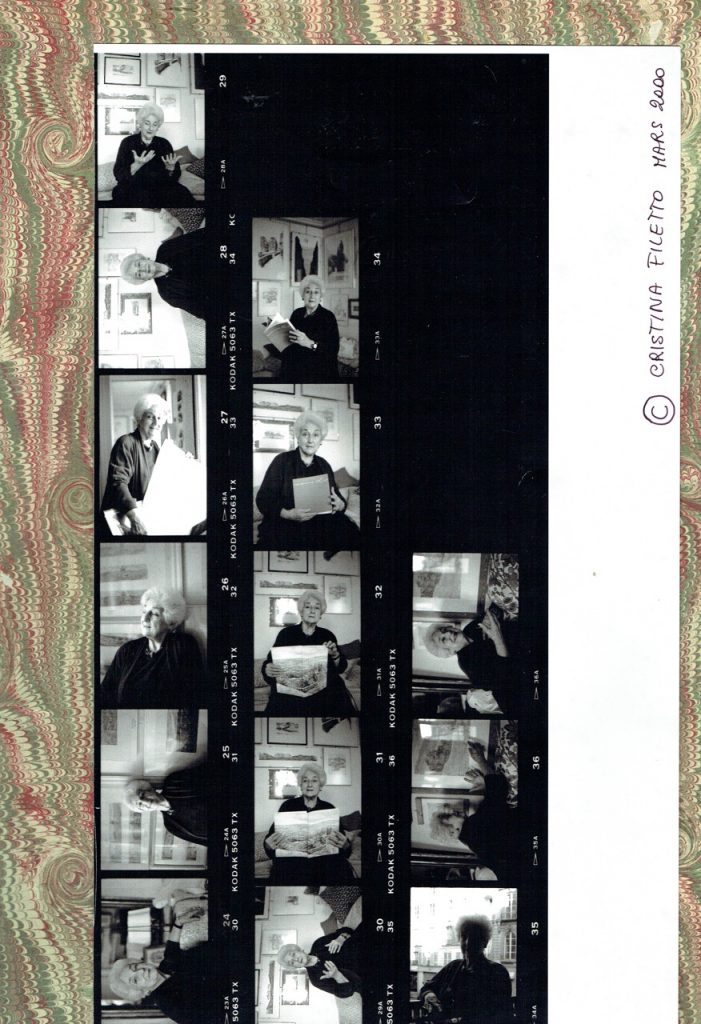
The constant element that unites every work in Memè Olivi’s long artistic career is balance. An instinctive balance, nourished by a deep love for the silence of places. Memè Olivi’s work takes shape through the careful observation of a landscape, imbued with emotions that alter and shape the natural lines, adapting them to a state of mind. And it is precisely this feeling that becomes Memè’s main source of inspiration: “I need an emotion to create, and in creating, I need to rediscover it intact”8.
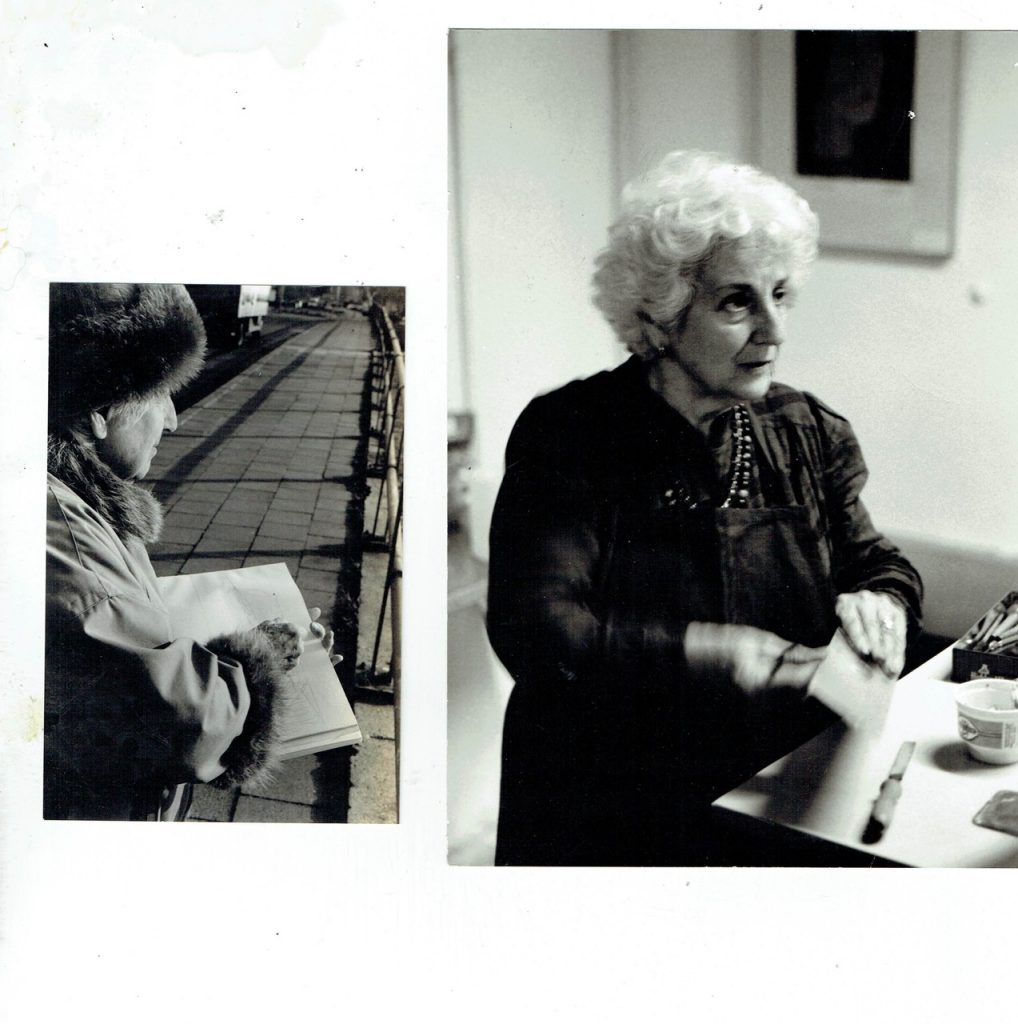
In the final years of her life, Memè continued to experiment. She devoted herself to perfecting new techniques, including glass engraving, which she practised in Venetian studios. As Franco Foschi writes in the catalogue of the Recanati exhibition, the range of artistic media she was able to use was extraordinarily vast: “Memè Olivi, like few others, draws from etching, drypoint, aquatint, lithography, woodcut and the most varied materials—wood, stone, metals—the ability to achieve delicate transparencies and unreal colours without the use of traditional pigments, effects that suggest the unsaid, beyond the real landscape”9. Her tireless work is fuelled by a constant desire for perfection, with continuous adjustments and refinements that she feels are necessary to achieve exactly the intended result. Her artistic exploration continued right up until the final years of her life.
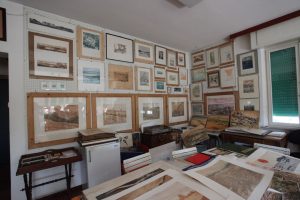
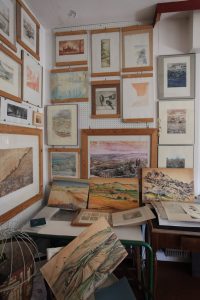
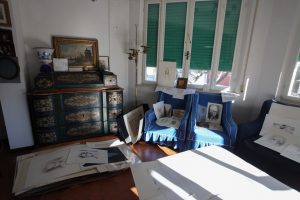
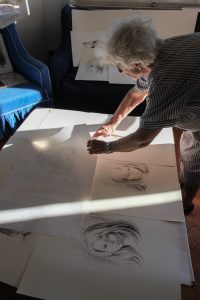
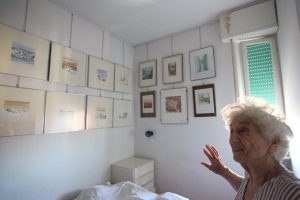
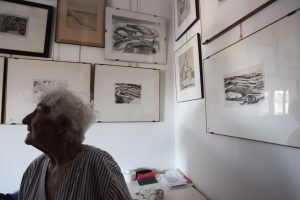
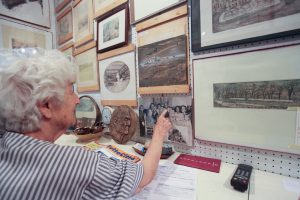
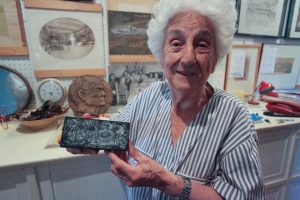
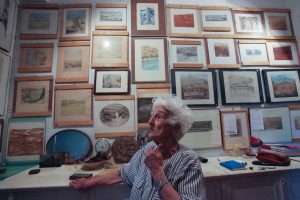
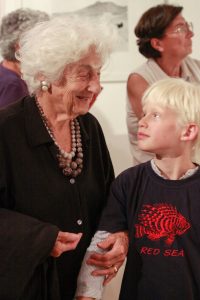
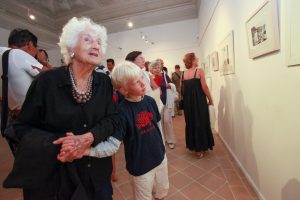
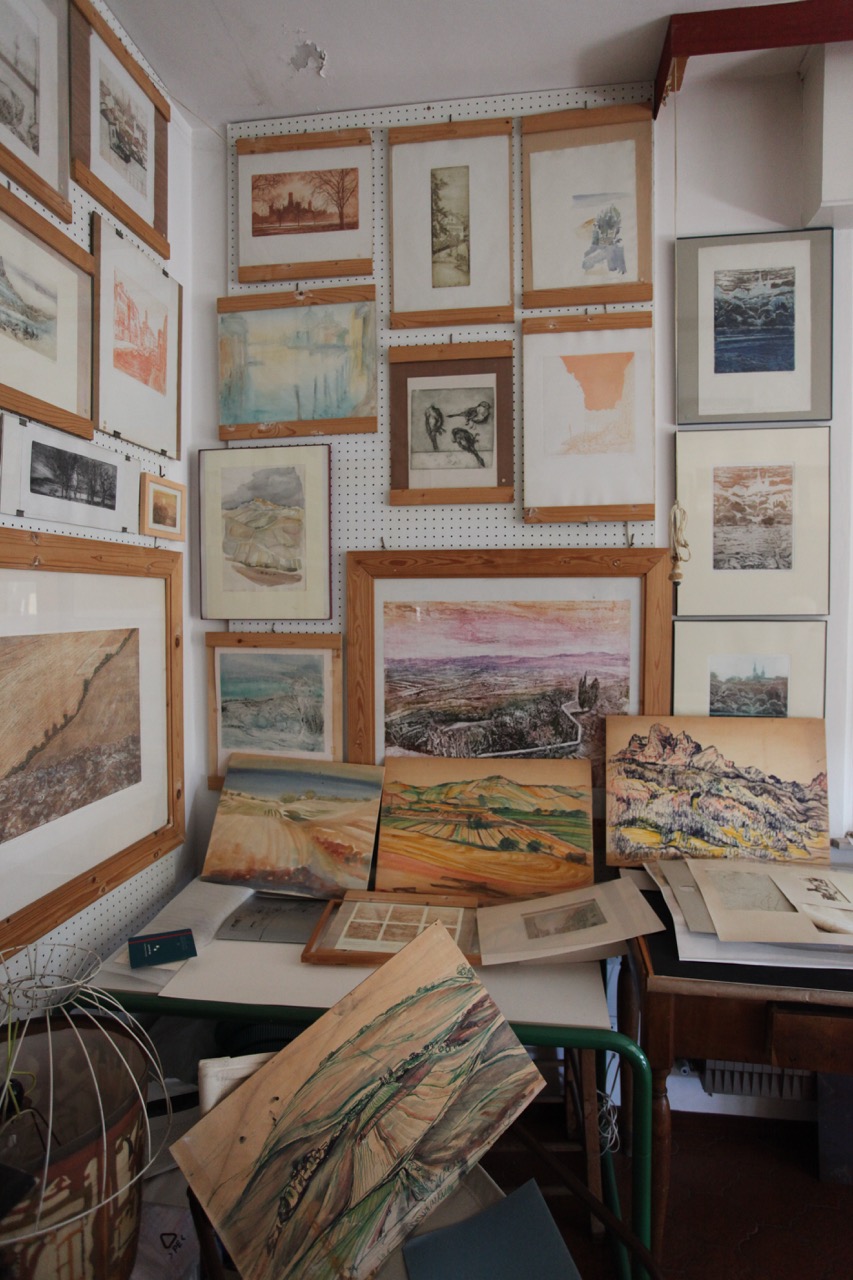
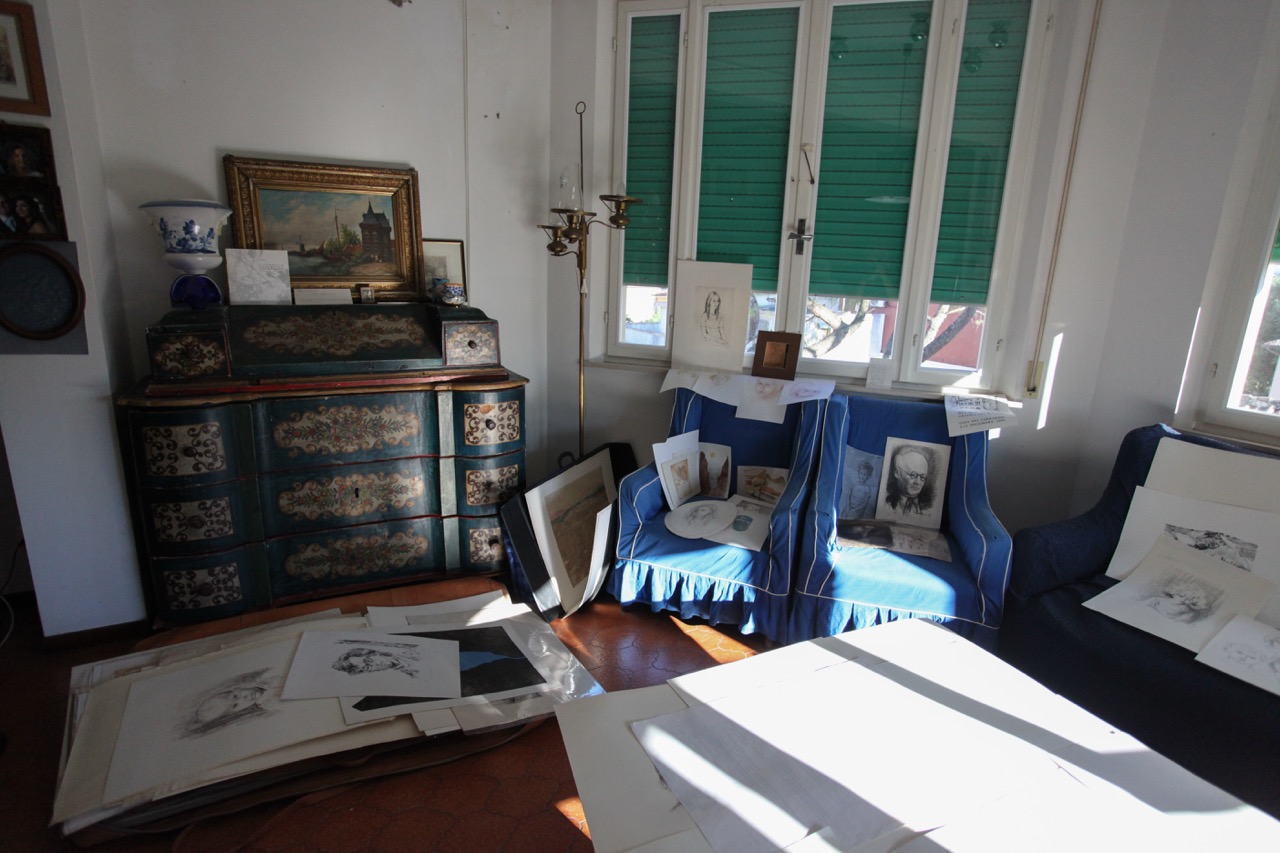
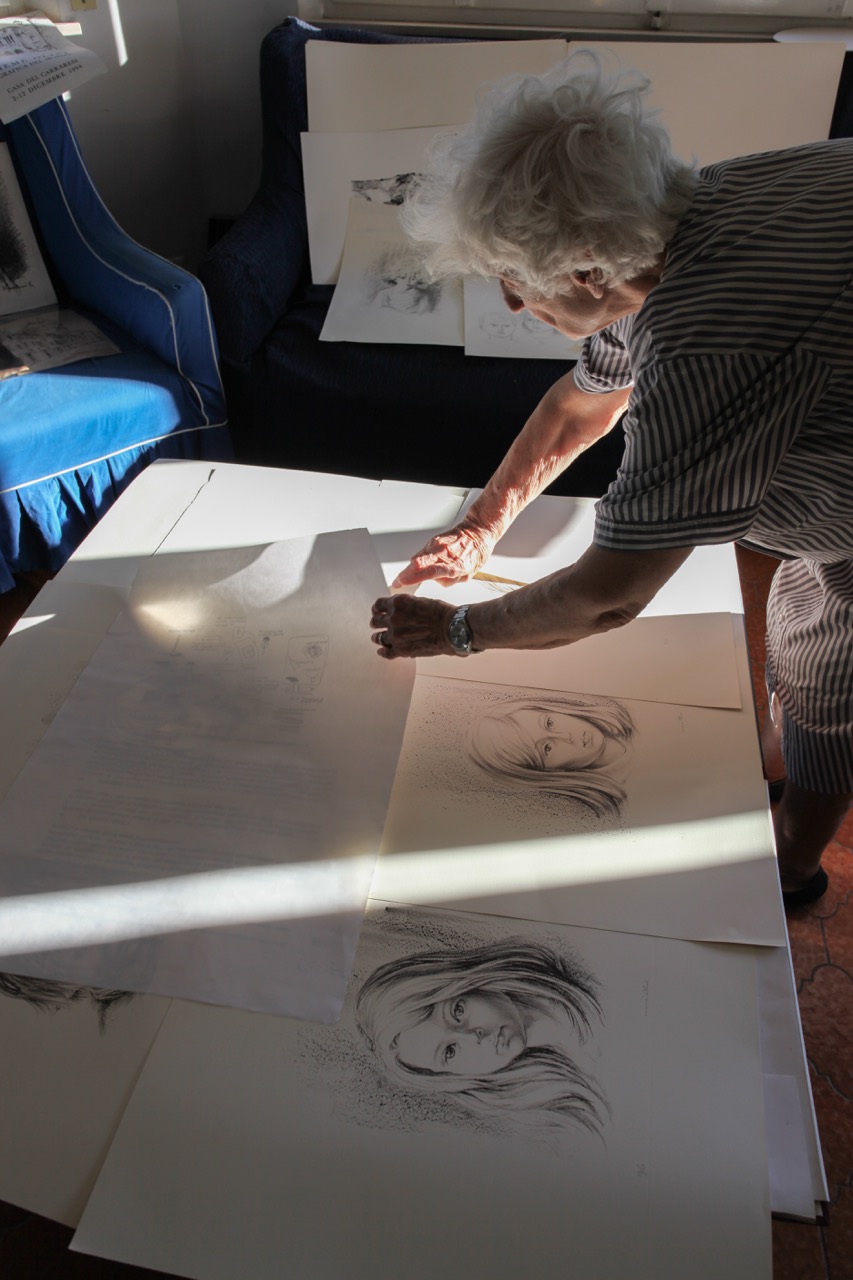
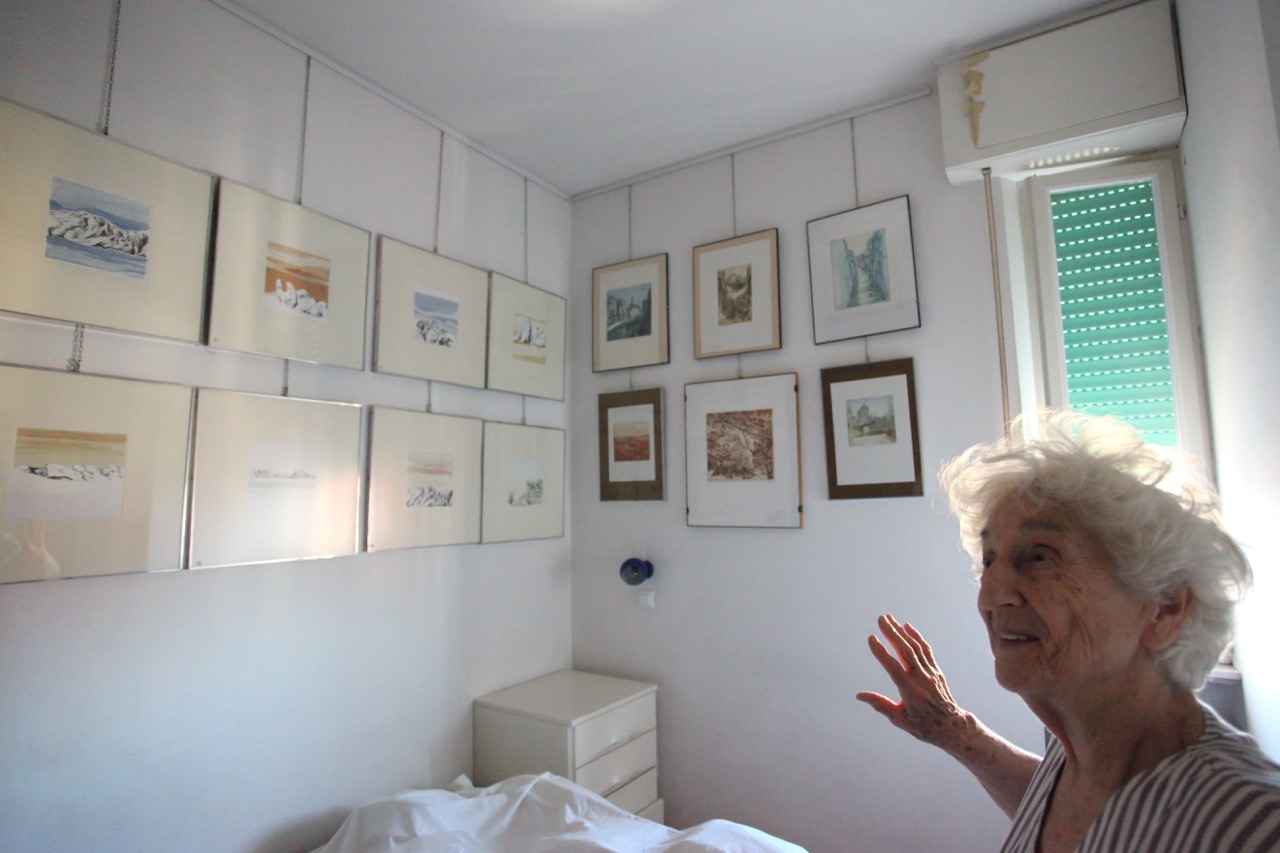
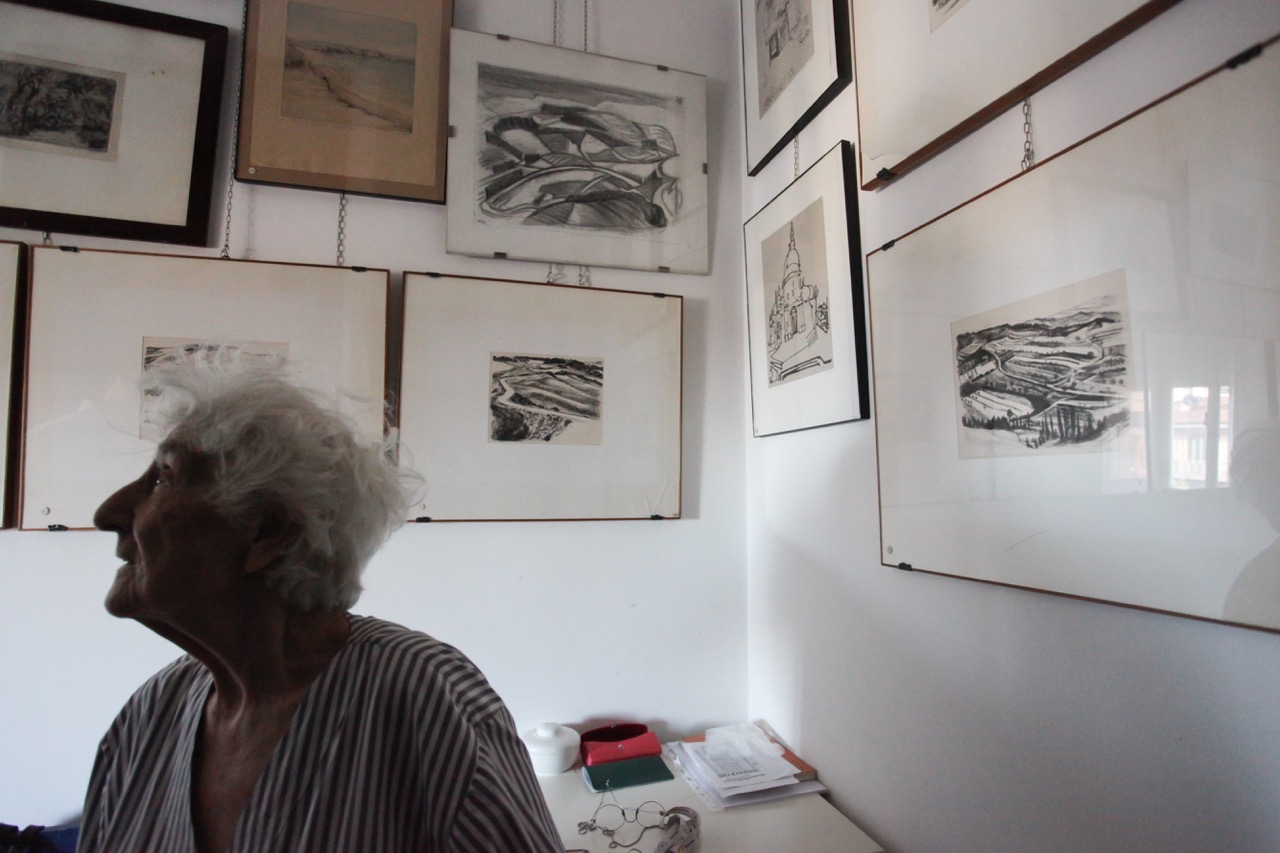
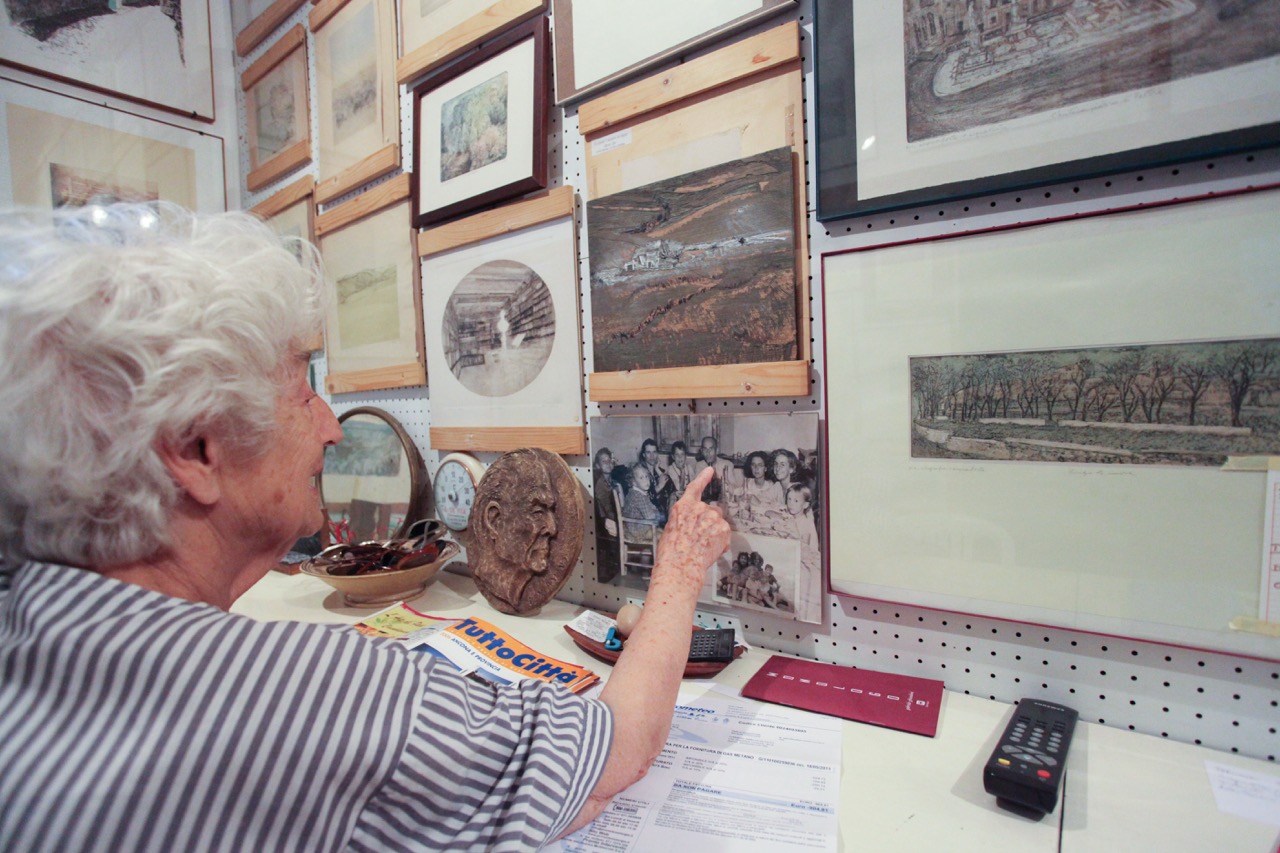
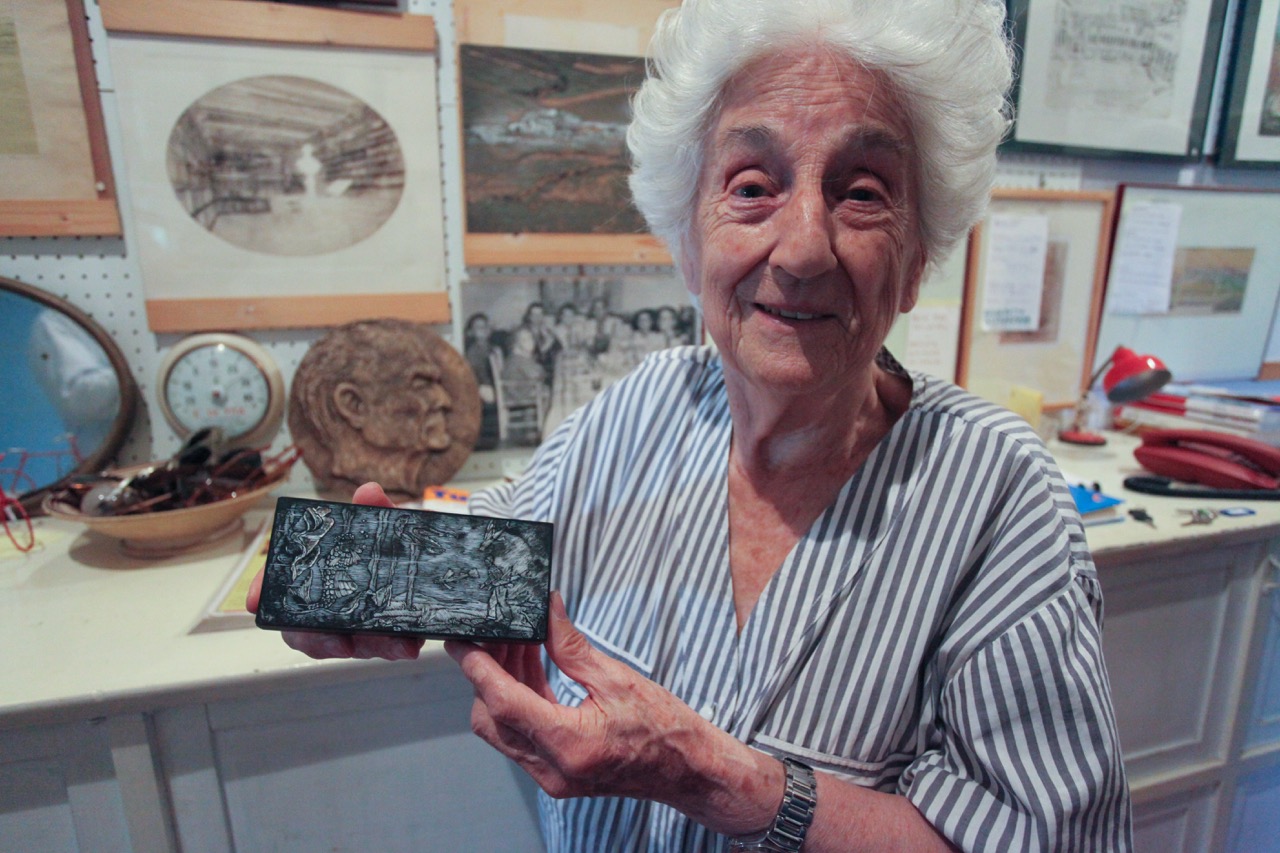
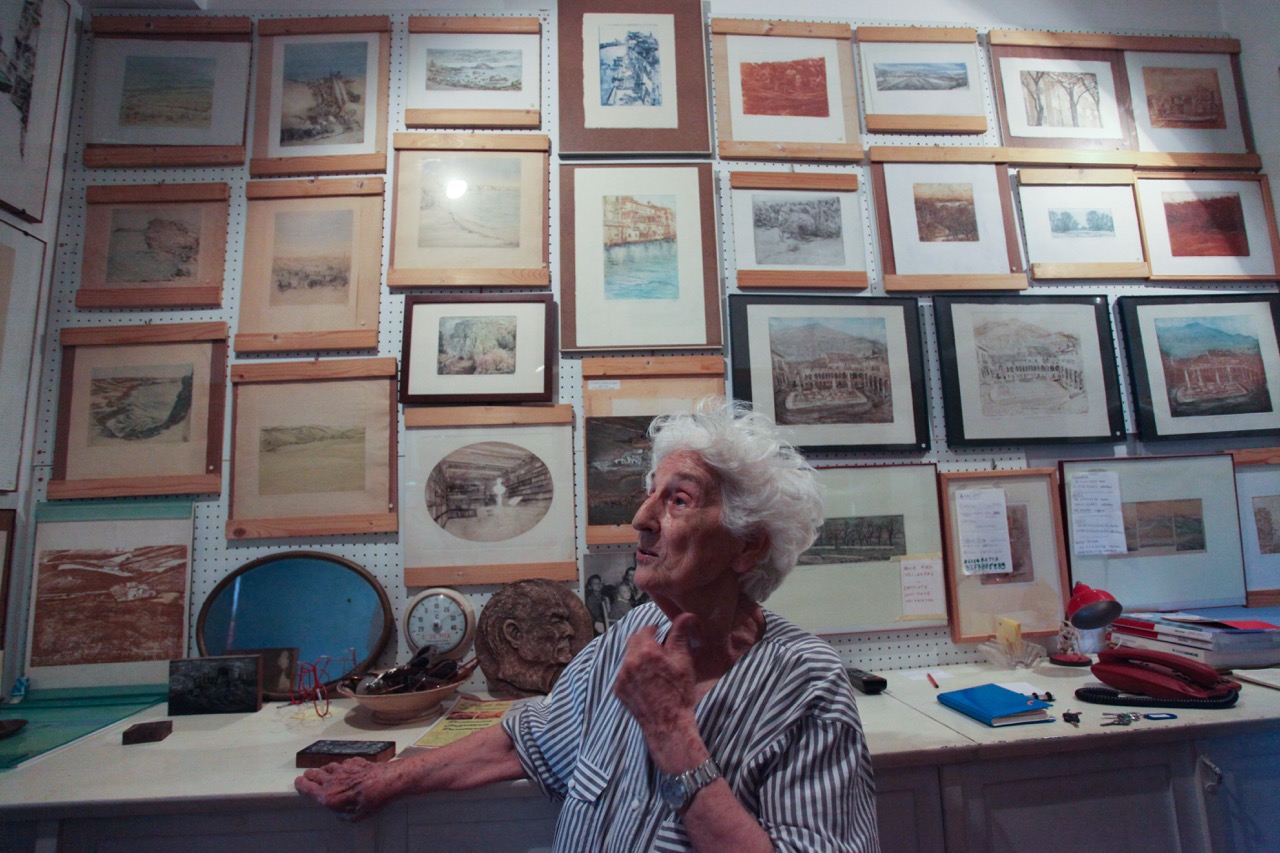
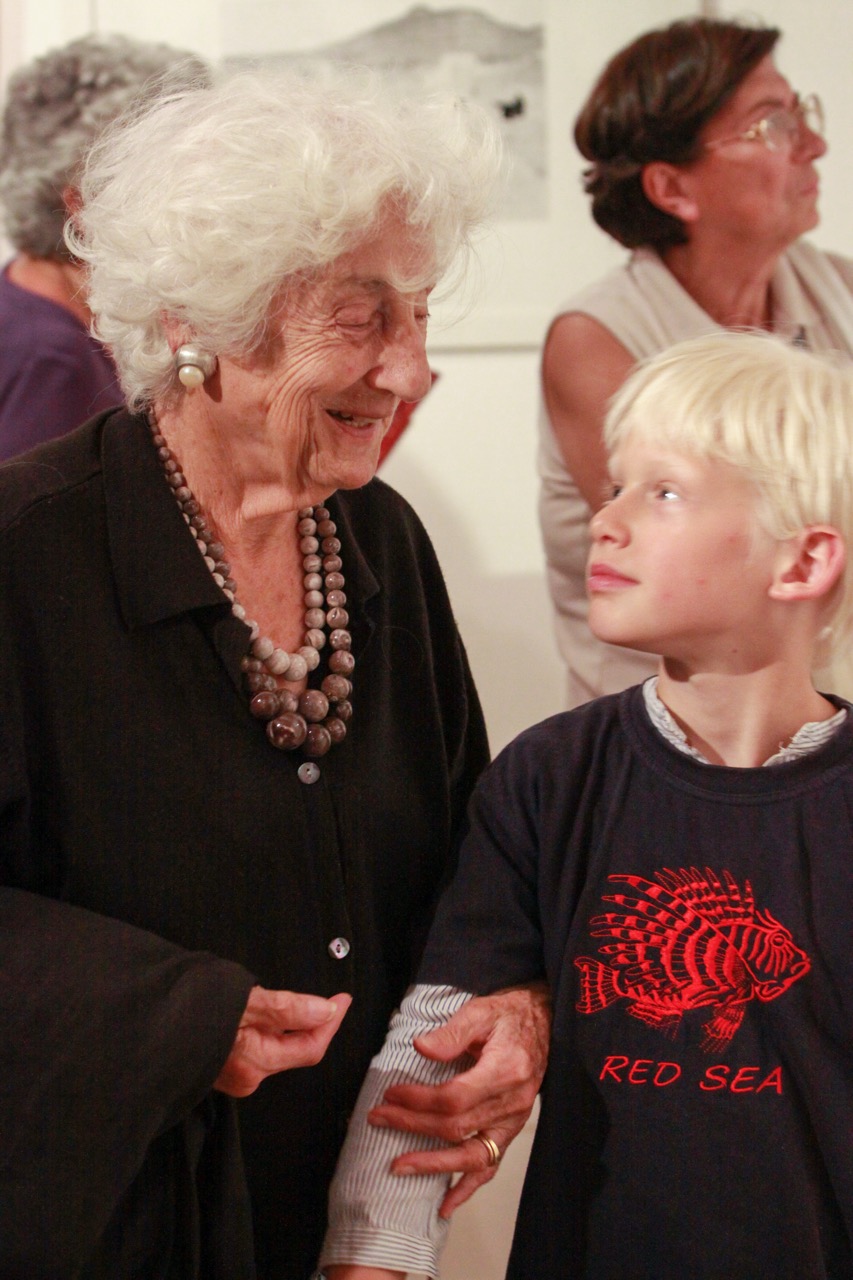
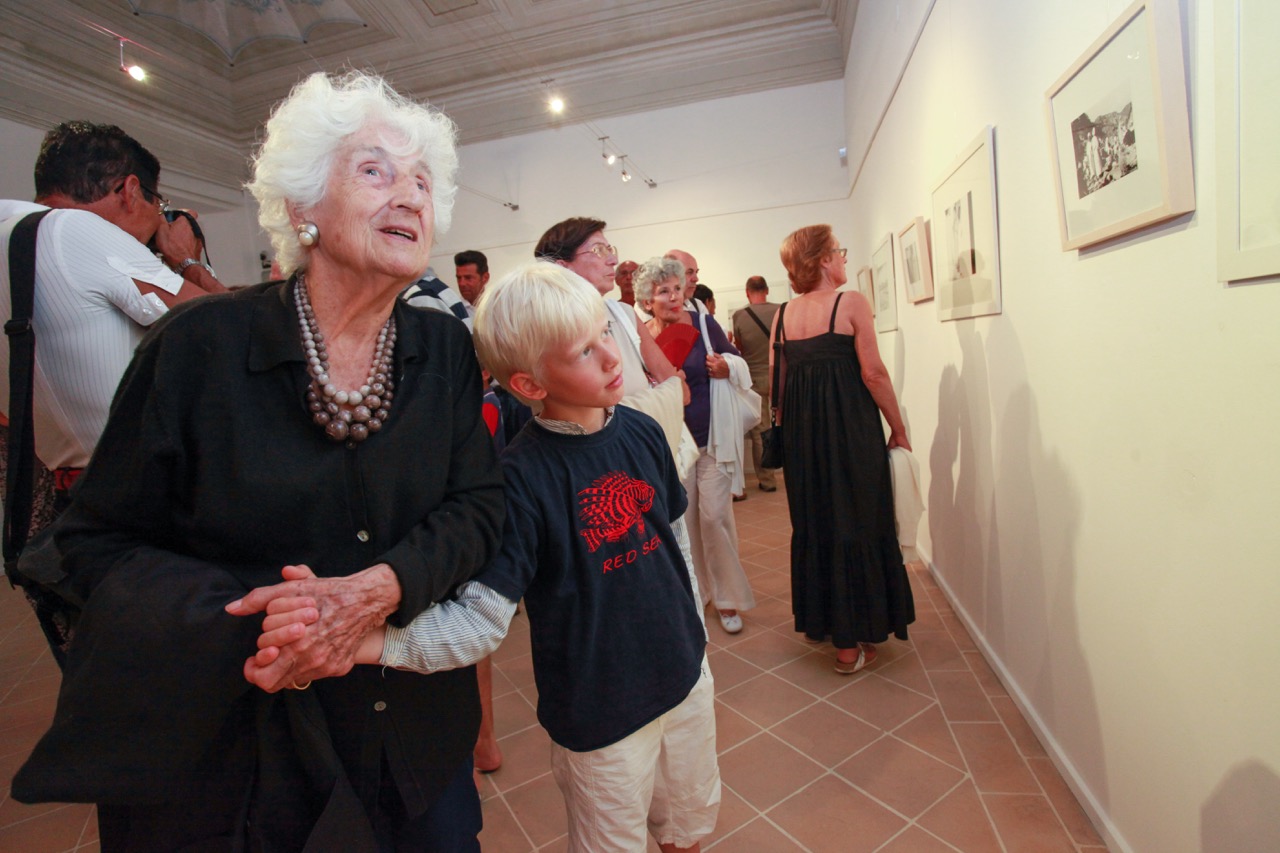
Patrizia Lo Conte immortalized Memè’s last summer in Senigallia in September 2011.
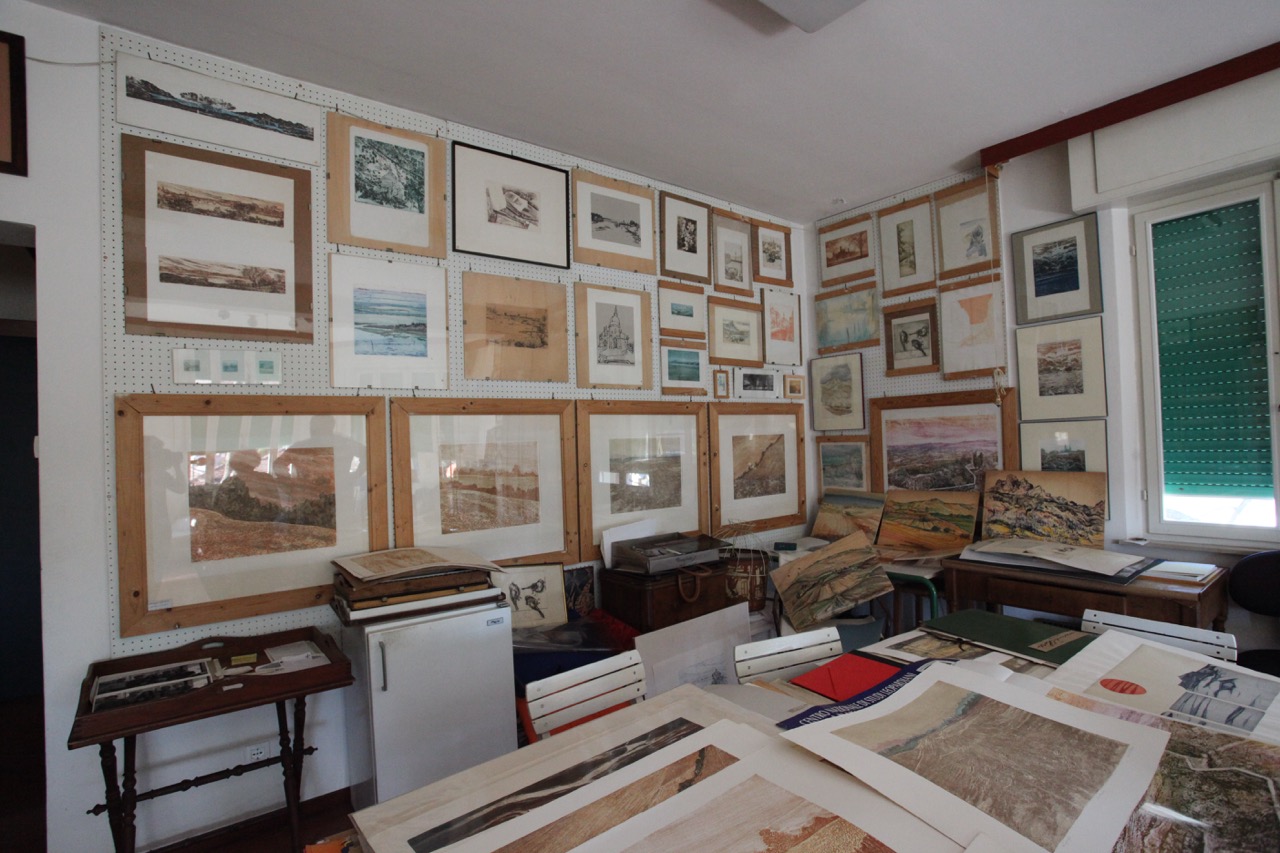
The photographer, Patrizia Lo Conte, commissioned by Carlo Bugatti of the MUSINF in Senigallia (Museum of Modern Art of Information and Photography), created the artist’s final photographic report at the age of 89. Memè Olivi showed her around his house-studio in Senigallia and presented a large part of his work kept there. It was a special day, during which Stefano, Patrizia’s husband, filmed some moments in which Memè talks about his work.