

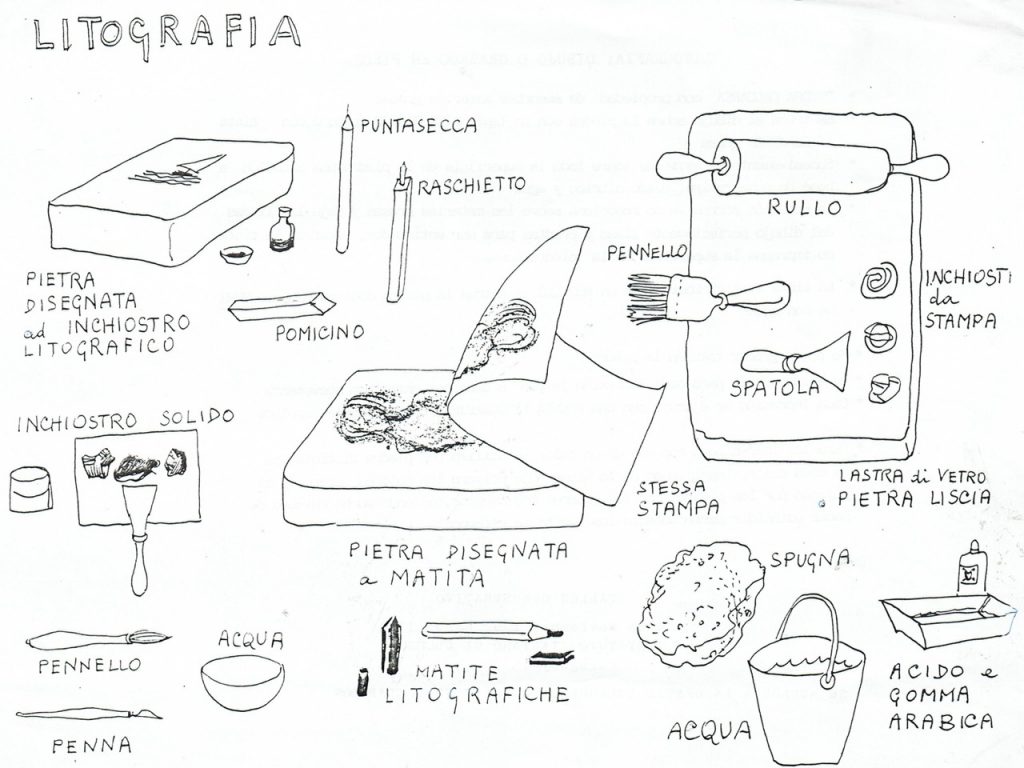
LITHOGRAPHY (drawing on stone)
Chalk stone is used because it can absorb oily materials. The drawing is done on the stone with a special grease crayon or with a grease ink. An acid solution is then spread over the surface but it does not react on the grease markings which are prepared to receive the ink impression. The stone surface on the other hand cannot receive the ink impression which is applied by a roller. The printing is done on a lithographic press and various colours can be printed by means of a different stone for each shade.
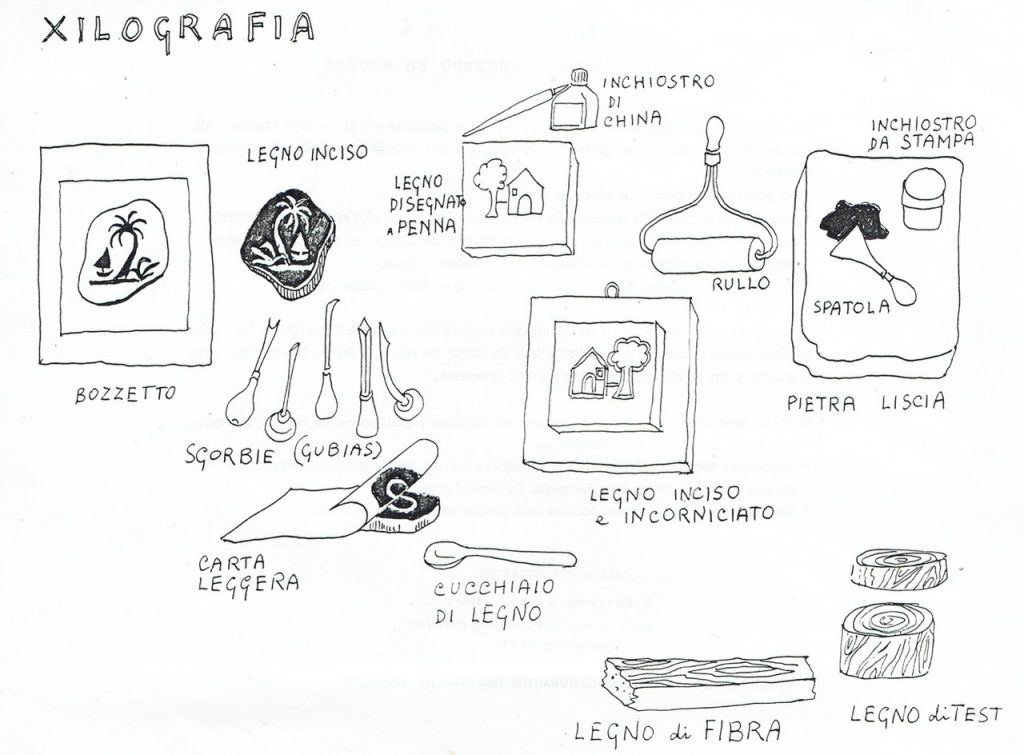
XYLOGRAPHY (wood engraving)
Special tools are used to trace on the wood surface the grooves which will represent the light part of the picture. Half-tones are obtained by more lightly traced lines. After an ink roller is passed over the wood surface, prints can be made by placing the paper over the inked surface and using a light pressure either manually or mechanically.
CHALCHOGRAPHY
Various metal engraving techniques carried out by leaving the ink in the grooves made by the engraver and by removing the ink from the surface of the metal. The print is made on a sheet of damp paper which is pressed into the grooves thus receiving the impression of the ink.
Aqua Fortis (acid), Puntasecca, Aquatint (metal coated with bitumen or resin and then treated with acid) Soft Varnish, Sugar Method, Maniera pittorica, Maniera nera, Maniera a lapis, etc..
AQUAFORTIS
A plate of zinc or copper is covered with a special acid resistant paint. The design is traced with steel tools which remove the paint. These tracing are corrosive to nitric acid and depend more or less on their depth and time exposes to the acid to obtain greys or blacks. The painted section remains intact. For the imprint the paint is removed.
PUNTASECCA
The incision is made directly onto the metal plate with one or more steel tools of varying measurements aided by a graver . Acid is not udes however ink is applied by swabbing. The ink is the removed from the surface and the plate is set with moist paper under press.
AQUATINT
A fine veil of bitumin powder, colophony or resin is placed over the metal surface which has been thoroughly cleaned. The powder is set by a light firing and the acid is then applied. If the artist desires darker greys through to velvet blacks the clearer sections are covered with a protection paint. This is repeated until the darkest tone is achieved. The acid exposure time is always calculated more or less by the second
OTHER TECHNIQUES: Soft-ground etching, crayon manner, sugar-lift aquatint, painterly techniques, mezzotint, and others.